Four measures of rice. I rinsed it, put it in the rice cooker, and pressed the Cook button.
Except I’d forgotten to add the water.
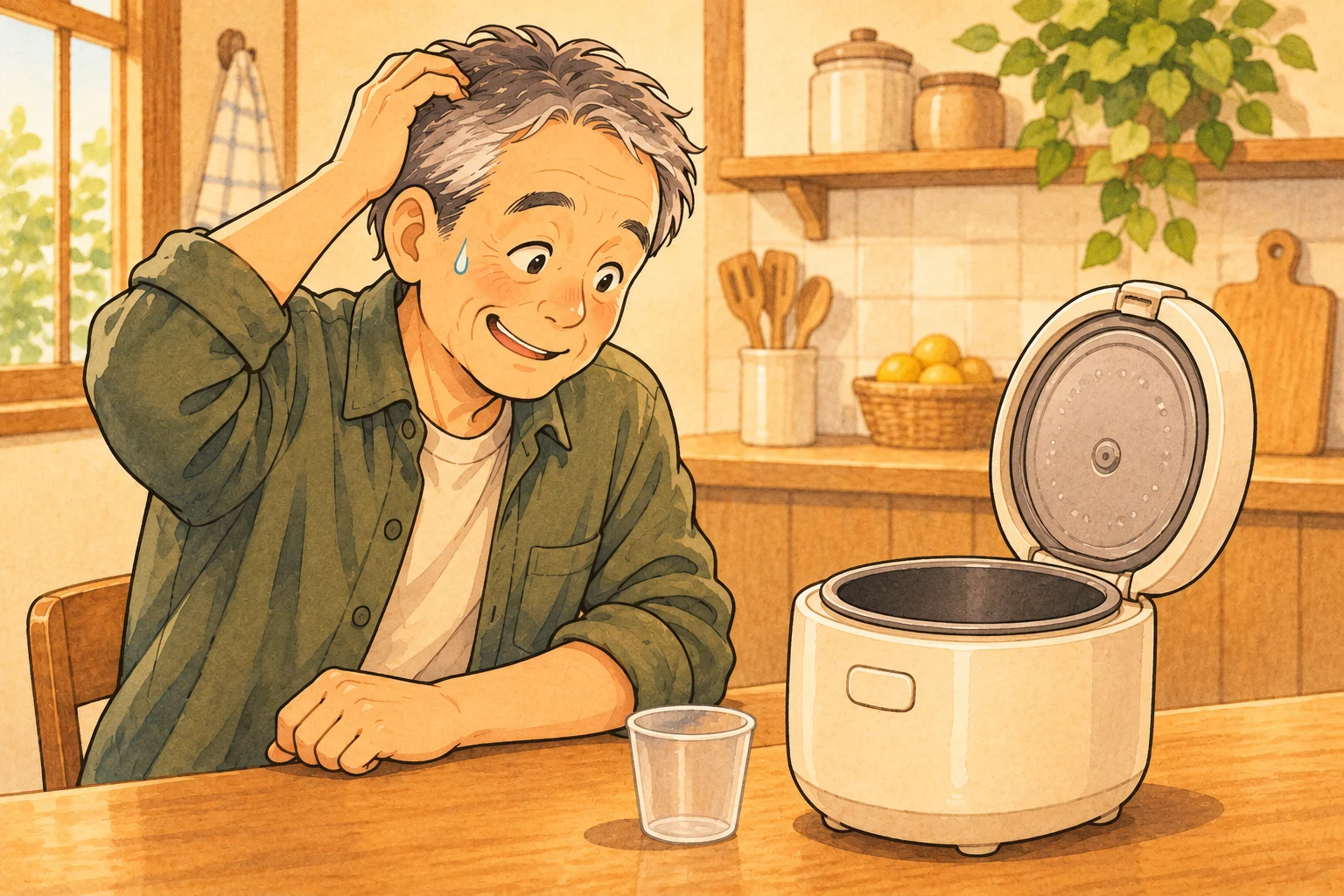
The rice came out dry and crumbly. And there were four measures of it. I turned to ChatGPT, which I call Kimiko-chan, to see if I could salvage the batch.
I added water and tried cooking it again. I tasted it, and it was still dry. At the time, I wondered if I should have used more water.
I told my son what had happened and asked for his advice. What should I have done?
My son, as it happens, is a product test engineer at a rice cooker manufacturer. Figuring out how to get a good pot of rice is part of his job.
His theory was that the first round of heating drove moisture out of the grains. That might have made it harder for them to absorb the water I added later, which would explain why the rice still came out dry.
I’d spent forty years building systems to prevent human error. Even after forgetting the water myself, my first instinct was to wonder how the machine could have prevented it. So I asked my son:
“If the cooker could tell how much water I’d added, it could have stopped me from starting it without water, right?”
“We hadn’t planned for someone to start it without water,” he said. “The way that inner pot is built, it can’t measure how much water is in it. The cooker carefully controls the temperature on the assumption that water is already there.”
That was the end of the design discussion. My son had one more observation, this time about me:
“Dad, you’re getting old.”
In the end, my wife decided to throw out the rest. That was the end of my rice rescue mission.
I asked Kimiko-chan what I could do after the mistake. I was the one who cooked it again and tasted it. Next time, the thing to work on is probably what I do before I press Cook. (Laughs.)
Based on the author’s account. His son’s explanation was a theory suggested at the time.